
Mon – Fri:    9:00 AM – 5:00 PM

ULTRASOUND-GUIDED THERMAL VEIN TREATMENT

Radiofrequency Ablation for Varicose Veins

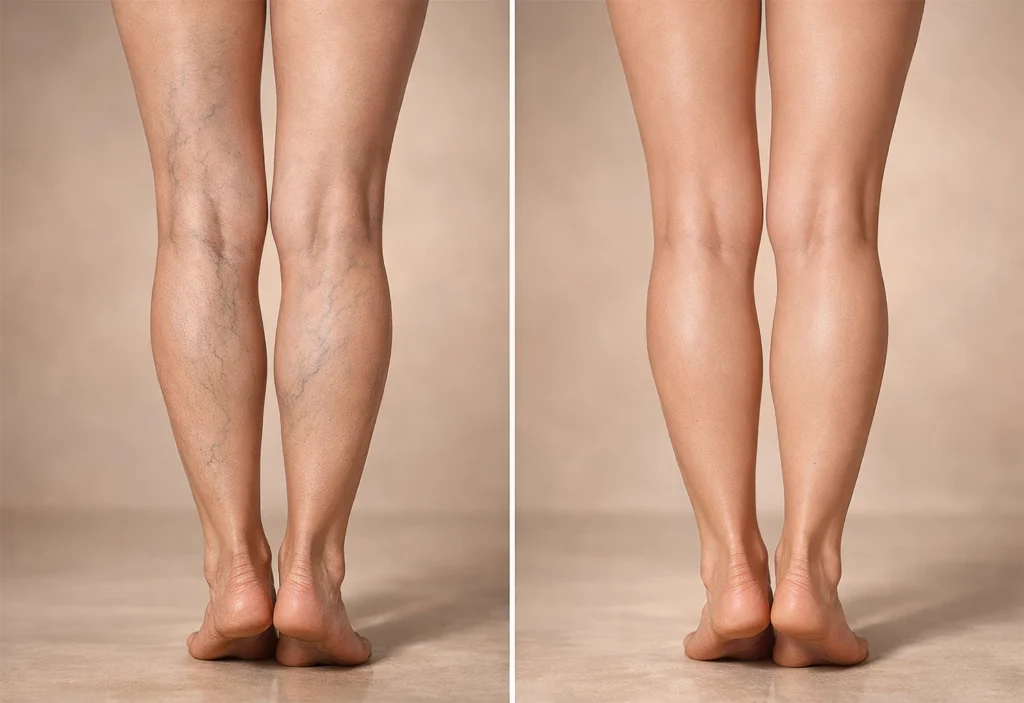
Radiofrequency ablation, also called RFA, is a minimally invasive treatment for eligible refluxing superficial veins associated with varicose veins and chronic venous insufficiency. Texas Vein Experts uses the ClosureFast™ catheter to deliver controlled radiofrequency energy inside the target vein, helping the vein shrink and close. Once the unhealthy refluxing vein closes, blood naturally redirects through nearby functioning veins. 
Varithena Ablation

The TVE Patient Commitment Guarantee means that if your leg symptoms don’t noticeably improve after completing your treatment plan, we’ll continue your care at no additional cost for eligible veins. Learn more.

ULTRASOUND-GUIDED THERMAL VEIN TREATMENT

RFA Treatment at a Glance

Treatment Type

Minimally invasive thermal, catheter-based vein treatment.

What It Treats

Eligible refluxing superficial veins associated with varicose veins and chronic venous insufficiency.

How It Works

Controlled radiofrequency energy heats the vein wall so the target vein contracts and closes.

Typical Treatment Time

Approximately 20-40 minutes, depending on the number and length of veins treated.

Guidance and Anesthesia

Performed with ultrasound guidance and local tumescent anesthesia around the target vein.

Typical Recovery

Many patients return to light routine activities the same day or within a few days, according to their aftercare plan.

UNDERSTANDING THE TREATMENT

What Is Radiofrequency Ablation for Varicose Veins?

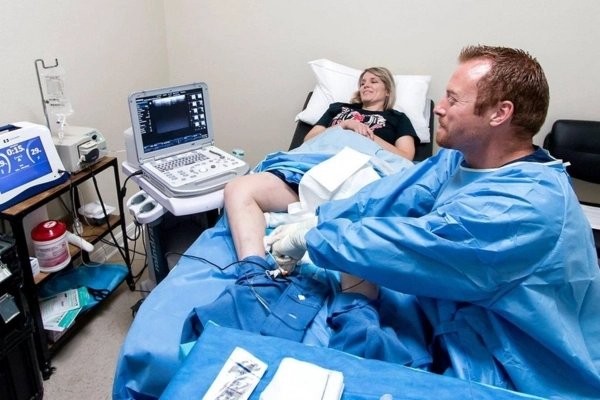
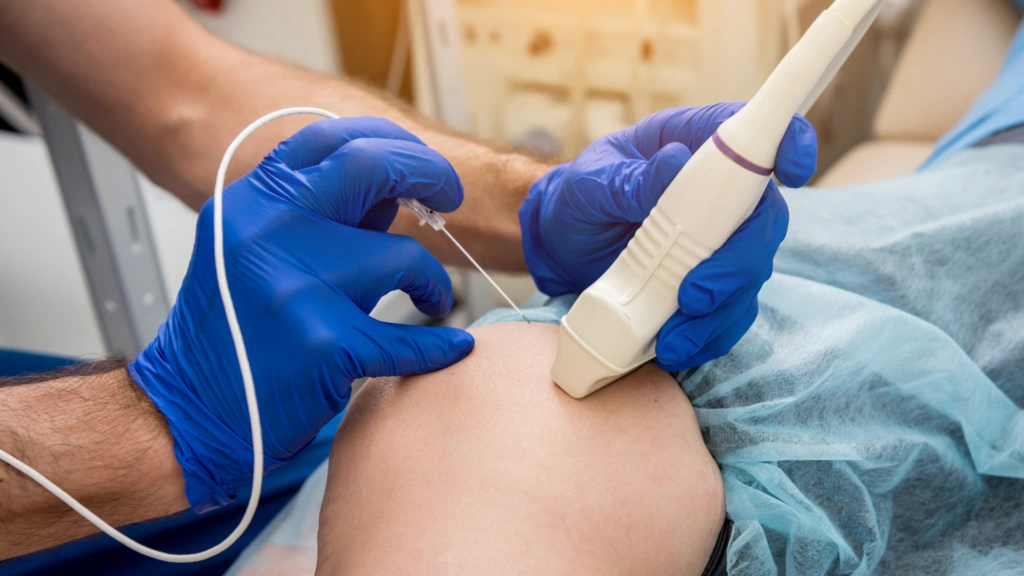
Radiofrequency ablation is an endovenous thermal treatment, meaning the procedure works from inside the vein. A physician introduces a thin ClosureFast catheter through a small needle-access site and guides it into the refluxing vein with ultrasound.

The catheter delivers controlled radiofrequency energy to the vein wall in short treatment segments. Tumescent local anesthesia is placed around the vein to numb the treatment area, protect nearby tissue from heat, and improve contact between the catheter and the vein wall.

As the catheter is withdrawn, the treated vein contracts and seals. The vein is no longer needed for effective circulation because it was allowing blood to flow backward. Blood naturally redirects through functioning veins, while the closed target vein is gradually absorbed or incorporated into surrounding tissue over time.

Varicose Veins

What Veins Can RFA Treat?

RFA may be considered for eligible refluxing superficial truncal veins, including certain segments of the great saphenous or small saphenous vein. The physician evaluates vein size, course, depth, reflux pattern, previous treatment, and nearby anatomy before recommending ClosureFast.

WHEN TO CONSIDER A VEIN EVALUATION

What Symptoms Can RFA Help Address?

Radiofrequency ablation may be considered when symptoms or visible varicose veins are linked to superficial venous reflux. These symptoms can have other causes, so an examination and duplex ultrasound are necessary before treatment is recommended.

Leg or Ankle Swelling

Swelling that becomes more noticeable after standing, sitting, or later in the day.

Aching or Leg Pain

A dull, throbbing, burning, or pressure-like discomfort associated with venous reflux.

Leg Heaviness and Fatigue

A tired or weighted feeling that may interfere with comfort, work, or activity.

Cramping or Restless Legs

Nighttime cramping or restlessness that may occur alongside other signs of vein disease.

Burning or Itching

Skin discomfort around areas affected by venous pressure or visible veins.

Skin Changes or Wounds

Discoloration, inflammation, thickening, or slow-healing skin changes that require clinical evaluation.

PERSONALIZED TREATMENT SELECTION

Could Radiofrequency Ablation Be Right for You?

RFA is not selected from visible veins or symptoms alone. Texas Vein Experts evaluates four factors together before deciding whether ClosureFast is the appropriate treatment option.

Your VenaSeal Recommendation Is Based on Four Factors

RFA may not be appropriate when the target vein contains an active thrombus or when anatomy, mobility, pregnancy, clotting risk, infection, or another medical factor makes a different approach safer. 

Symptoms and Medical History

The team reviews aching, swelling, skin changes, previous vein treatment, blood-clot history, medications, mobility, pregnancy status, and other health considerations.

Physical Examination

Your provider evaluates visible varicose veins, swelling, tenderness, skin condition, and how symptoms affect daily activities.

Duplex Ultrasound Findings

Onsite ultrasound maps venous reflux, identifies the affected superficial vein, and documents vein size, depth, course, and nearby anatomy.

Personalized Treatment Recommendation

The physician compares RFA with VenaSeal, Varithena, compounded sclerotherapy, or a combined treatment plan according to anatomy, goals, and coverage requirements.

THE CLOSUREFAST PROCEDURE

What Happens During Radiofrequency Vein Ablation?

Radiofrequency ablation is performed in an outpatient office setting. The exact steps may vary according to the target vein and treatment plan, but the patient journey should be presented in five clear stages.

1

Map the Refluxing Vein

Duplex ultrasound confirms the target vein, reflux pattern, access point, and treatment length.

2

Prepare and Numb the Area

The skin is cleaned, a small access site is created, and tumescent local anesthesia is placed around the vein.

3

Position the ClosureFast Catheter

The physician advances the thin catheter inside the target vein under continuous ultrasound guidance.

4

Deliver Radiofrequency Energy

Controlled heat is applied in short segments as the catheter is withdrawn, causing the vein wall to contract and close.

5

Confirm Closure and Begin Recovery

Ultrasound checks the treated segment. The access site is covered, compression is applied when recommended, and the patient walks before leaving.

ON TREATMENT DAY AND AFTER YOUR PROCEDURE

What Should You Expect With RFA?

On Treatment Day

Leg or Ankle Swelling

Swelling that becomes more noticeable after standing, sitting, or later in the day.

Receive Tumescent Anesthesia

A series of small injections places local anesthetic around the vein to numb the area and protect nearby tissue.

Complete the Catheter Treatment

The ClosureFast catheter treats the refluxing vein in short segments while the physician monitors positioning with ultrasound.

Compression, Walking, and Discharge

A bandage and compression may be applied. Patients are generally encouraged to walk and leave the clinic the same day.

After the Procedure

First Few Days

Temporary tenderness, tightness, bruising, mild swelling, or a pulling sensation can occur around the treated vein or access site.

Return to Routine Activities

Many patients return to light daily activities the same day or within a few days while avoiding prolonged standing or strenuous activity as directed.

Symptom Improvement

Some patients begin noticing relief within about two days, with more noticeable improvement over the following one to two weeks. Individual response varies.

Follow-Up Ultrasound

Follow-up imaging may be used to confirm closure and check the deep veins. Additional treatment may be recommended for other refluxing or visible veins.

CHOOSING THE RIGHT VEIN TREATMENT

How Does RFA Compare With Other Vein Treatments?

The physician selects treatment based on symptoms, anatomy, ultrasound findings, medical history, patient preferences, and the type of veins involved. No single procedure is right for every patient or every vein.

Comparison RFA / ClosureFast™ VenaSeal™ Varithena® Compounded Sclerotherapy
Treatment type Thermal, catheter-based ablation Nonthermal, catheter-based adhesive closure Nonthermal prescription microfoam treatment Liquid or physician-compounded foam injection
How it works Controlled radiofrequency energy closes the target vein wall Medical adhesive seals an eligible refluxing target vein Prescription microfoam fills and closes an eligible target vein A sclerosant solution closes spider veins or selected small varicose veins
Possible role Eligible refluxing superficial truncal veins Eligible superficial truncal veins where adhesive closure is appropriate Eligible refluxing veins and associated varicosities Spider veins, reticular veins, selected small varicose veins, or residual surface veins
Anesthesia and access Small catheter access plus tumescent anesthesia around the vein Small catheter access; tumescent anesthesia is generally not required Needle or catheter access; tumescent anesthesia is generally not required One or more small injections according to the treatment area
Compression Usually recommended according to the physician’s protocol Often unnecessary, although recommendations vary Recommendations are individualized May be recommended according to the veins treated
Why it may be selected A widely used heat-based option for suitable refluxing veins with long-term clinical data A nonthermal option that avoids heat and multiple tumescent injections A nonthermal option that can treat certain vein shapes without adhesive implantation An injection-based option for smaller visible or superficial veins
No single treatment is right for every vein. A duplex ultrasound and physician evaluation should determine the most appropriate option.

INSURANCE AND BENEFITS

Is Radiofrequency Ablation Covered by Insurance?

Insurance coverage depends on the patient’s plan, diagnosis, documented symptoms, ultrasound findings, medical-necessity criteria, prior authorization requirements, and network status. Benefits verification does not guarantee payment, and patient responsibility may include deductibles, copayments, or coinsurance.

Texas Vein Experts works with most major insurance plans and offers free benefits verification so patients can better understand available coverage before scheduling treatment.

What the TVE Team Can Help Review

1. Consultation

The team reviews symptoms, health history, previous care, and treatment goals.

2. Duplex Ultrasound

Onsite diagnostic imaging documents venous reflux and the affected vein when medically appropriate.

3. Benefits Review

The verification team checks plan requirements, authorization needs, and estimated patient responsibility.

4. Scheduling

The clinic explains next steps and coordinates treatment at the preferred TVE location.

RFA CARE ACROSS TEXAS

Why Choose Texas Vein Experts?

Ultrasound-Guided Evaluation

Your symptoms, vein anatomy, and duplex ultrasound findings help determine whether ClosureFast may be appropriate.

Experienced Vein Specialists

Your evaluation and treatment plan are guided by physicians experienced in venous disease and minimally invasive care.

20-40 Minute Treatment

RFA is a minimally invasive outpatient procedure that generally takes approximately 20-40 minutes.

Personalized Aftercare

You receive clear guidance about walking, activity, compression, follow-up imaging, and any additional vein treatment.

YOUR VEIN CARE TEAM

Meet the Doctors Who Perform RFA Treatment

scott

Dr. Scott Powell, MD

Vein Specialist

Board-Certified General Surgeon

Treating venous disorders since 2011

Locations served:

Denton

Alliance

Fort Worth

Richardson

Dr. Scott Powell graduated from UTMB Medical School and completed a five-year surgical residency at the University of Florida. He has practiced in Texas since 2003 and has specialized in the treatment of venous disorders since 2011. He has taught colleagues and peers about venous disease at national conferences and has served as a physician trainer.

Dr. Aaron Chance, MD

Houston Medical Director

McGovern Medical School

Minimally invasive vein care

Locations served:

Cypress

Humble

Katy

Pearland

Sugar Land

The Woodlands

Aaron B. Chance, MD, specializes in venous insufficiency and graduated from McGovern Medical School in Houston. He trained under Dr. Scott Powell and serves as Medical Director of Texas Vein Experts in Houston. Dr. Chance provides minimally invasive treatments designed to improve comfort and mobility through a streamlined outpatient experience.

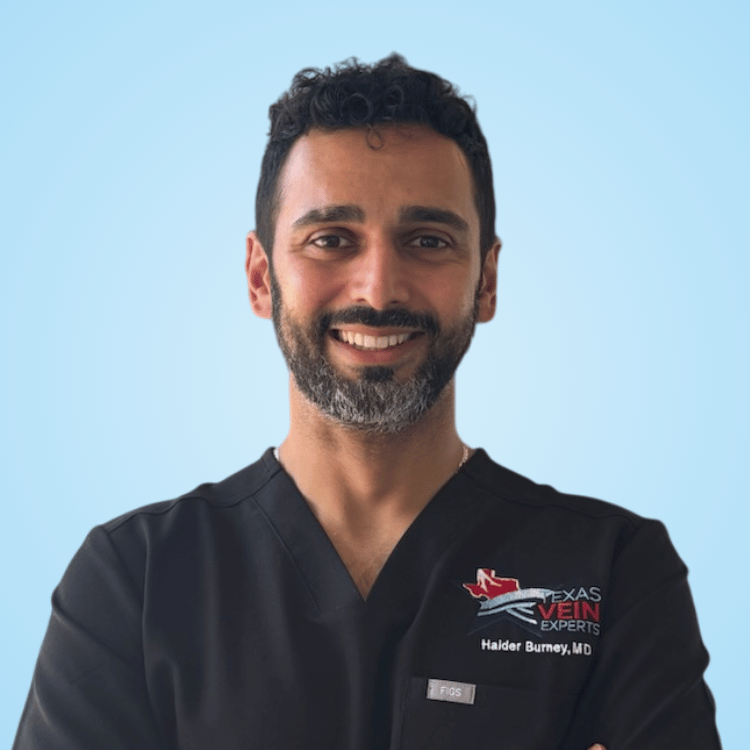
Dr. Haider Burney, MD

Vein Specialist

Board-Certified Internal Medicine

Hospital and wound-care background

Locations served:

Frisco

Waxahachie

Grand Prairie

Burleson

Dr. Haider Burney is a board-certified internal medicine physician with a background in hospital medicine and wound care. He earned his medical degree from the American University of Antigua and completed his residency at One Brooklyn Health System in New York, where he also served as an Assistant Program Director. At Texas Vein Experts, he diagnoses and treats venous insufficiency using minimally invasive techniques and a personalized approach to care.

Dr. Pavel Valdes, MD

Vein Specialist

Board-Certified Internal Medicine

Ultrasound-guided vein care

Locations served:

New Braunfels

San Antonio

Stone Oak

Dr. Pavel Valdes is a board-certified internal medicine physician specializing in minimally invasive vein care. He provides ultrasound-guided treatment for varicose veins, chronic venous insufficiency, leg pain, venous ulcers, and related vein conditions. He refined his expertise through specialized one-on-one training in modern vein medicine under the guidance of Dr. Scott J. Powell and focuses on compassionate, personalized care.

VEIN CARE YOU CAN TRUST

Top-Rated Vein Care Across Texas

Everyone was professional & pleasant to deal with, starting with the receptionist who greeted me, to the techs who took my medical info & performed the doppler, to Jesus the provider who explained the results of my exam & treatment options. I highly recommend the Ft Worth-Alliance office!
What’s not to love. Super clean facility, friendly staff, crazy fast wait times to be seen, professional and very knowledgeable. Oh and they’ve got offices located in different parts of DFW. So again, what’s not to love about that.
So far so good! I haven't started treatments yet, but first impressions are important! I love that you get a sonogram and a consultation and treatment plan all in the first appointment. The staff are all super nice, and Jesus (Waxahachie location) listened carefully to what I had to discuss with him. We have first treatment already set up!
Dr. Powell is one of the best Vascular Surgeon that I have found as our move to Oklahoma. He has done amazing procedure on my right leg. I would highly recommend him to anyone. His staff is great so if you are looking for a great Vascular Surgeon, he is the one. Thank you Dr. Powell and his staff.i was so blessed to find you.
This place always got me & my family in fast and easy!! They explain everything to your understanding and made me feel more comfortable! Nicole helped me personally a lot and made sure I was taken care of. Thank you Nicole and Texas vein experts!!!
I was comfortable,with my visit.Everyone was Super Nice,The doctor Rachelle came n my room and explained n detail what and were my pains were. Yes I am going to follow her advice on both my legs.C. U. On Wednesday Dr. Rachelle. Thank U and your staff from Susan Ball~Thompson
Happy with my treatment!!! It meet my needs on my veins health,and comfort on every procedure. I feel much better.The staff is very friendly and doctors very profesional. I highly recomend this place to friends and family.
The staff is exceptionally friendly and very helpful. Bradley explained the options very clearly. Bert is trained on the ultrasound and is friendly and explained what was happening. Ruben greeted and explained at the end what was happening and the next steps in addition to what Bradley had done. All around, highly recommend.
The staff is very cheerful and accommodating. I never have to wait longer than a few minutes until I see the doctor. Everything about the procedure is clearly explained and all my questions are answered. Great experience!
Dr Powell and Dr Howe have been incredible in my time being treated at Texas Vein Experts. I was scared and really nervous my first procedure and the entire staff put all my fears first and talked me through everything before they did it. I would highly recommend this office for anyone dealing with vein problems.

RFA TREATMENT NEAR YOU

Find a Texas Vein Experts Clinic

COMMON RFA QUESTIONS

Frequently Asked Questions About Radiofrequency Vein Ablation

Radiofrequency ablation is a minimally invasive treatment for eligible refluxing superficial veins. A thin catheter delivers controlled radiofrequency energy inside the target vein, causing the vein wall to contract and close. Blood then redirects through nearby functioning veins.

The physician uses ultrasound to place the ClosureFast catheter through a small access site. Tumescent local anesthesia is placed around the vein, and the catheter applies controlled heat in short segments as it is withdrawn. Ultrasound is used to confirm treatment of the target vein.
The treated vein is already allowing blood to flow backward rather than efficiently toward the heart. Closing that refluxing superficial vein allows blood to redirect through functioning veins. RFA does not remove the deep veins that carry most of the blood from the leg, and it should not be presented as a guaranteed cure for every circulation problem.
Candidates generally have symptoms or visible varicose veins connected to reflux in an eligible superficial vein. The decision depends on medical history, physical examination, duplex ultrasound, vein anatomy, mobility, clotting risk, and the overall treatment plan.
Patients may feel brief stinging from numbing injections, pressure during catheter placement, or temporary pulling, tightness, or soreness afterward. Tumescent anesthesia is used to numb the treatment area and protect nearby tissue. The procedure should not be described as completely pain-free.
Texas Vein Experts currently describes the procedure as taking approximately 20-40 minutes. Total appointment time may be longer because of preparation, ultrasound confirmation, anesthesia, compression, walking, and aftercare instructions.
Walking is commonly encouraged after treatment. Temporary tenderness, tightness, bruising, mild swelling, or altered sensation may occur around the treated vein or access site. Follow the clinic’s instructions for compression, activity, bathing, travel, and follow-up ultrasound.
Light walking is commonly encouraged, but strenuous exercise, heavy lifting, prolonged standing, or high-impact activity may be restricted temporarily. The exact timeframe should follow the treating physician’s aftercare instructions because treatment extent and patient health vary.
Mild temporary swelling or tenderness can occur. Contact the clinic for worsening, persistent, or one-sided swelling; increasing redness or warmth; severe pain; drainage; fever; new numbness or weakness; or other concerning symptoms. Seek urgent medical care for chest pain, difficulty breathing, fainting, or symptoms of a possible blood clot.
Some patients begin noticing symptom improvement within about two days, with more noticeable improvement over the following one to two weeks. Visible veins and swelling may improve more gradually, and additional surface-vein treatment may be needed.
ClosureFast is designed to provide durable closure of the treated refluxing vein. Medtronic reports a 91.9% closure rate at five years in published long-term data. Individual results vary, and treatment does not prevent other veins from developing reflux or becoming visible in the future.
RFA is widely used, but all medical procedures involve potential risks. Possible effects include temporary pain, bruising, swelling, inflammation, numbness or nerve irritation, skin discoloration or burn, infection, phlebitis, thrombosis, vessel injury, or pulmonary embolism. The physician will review individual risks before treatment.
RFA is an endovenous, minimally invasive outpatient procedure rather than traditional open vein surgery. It uses a small needle-access site and catheter instead of surgical vein stripping or a large incision.
Cost depends on the number of veins treated, the treatment plan, provider network, deductible, copayment, coinsurance, and authorization requirements. Medically necessary RFA may be covered by insurance when plan criteria are met. Texas Vein Experts offers free benefits verification, but verification does not guarantee payment.
RFA uses controlled heat and tumescent anesthesia to close an eligible refluxing vein. VenaSeal uses medical adhesive without heat, Varithena uses prescription microfoam, and compounded sclerotherapy uses liquid or foam injections for selected veins. Duplex ultrasound and physician evaluation determine which option is most appropriate.
Both treatments use thermal energy delivered through a catheter, but RFA uses radiofrequency energy while endovenous laser ablation uses laser energy. Published comparative studies have reported less early pain and bruising with ClosureFast RFA than with some laser techniques. TVE should confirm whether this comparison will appear on the final page.