





Mon – Fri: 9:00 AM – 5:00 PM
PRESCRIPTION MICROFOAM VEIN TREATMENT
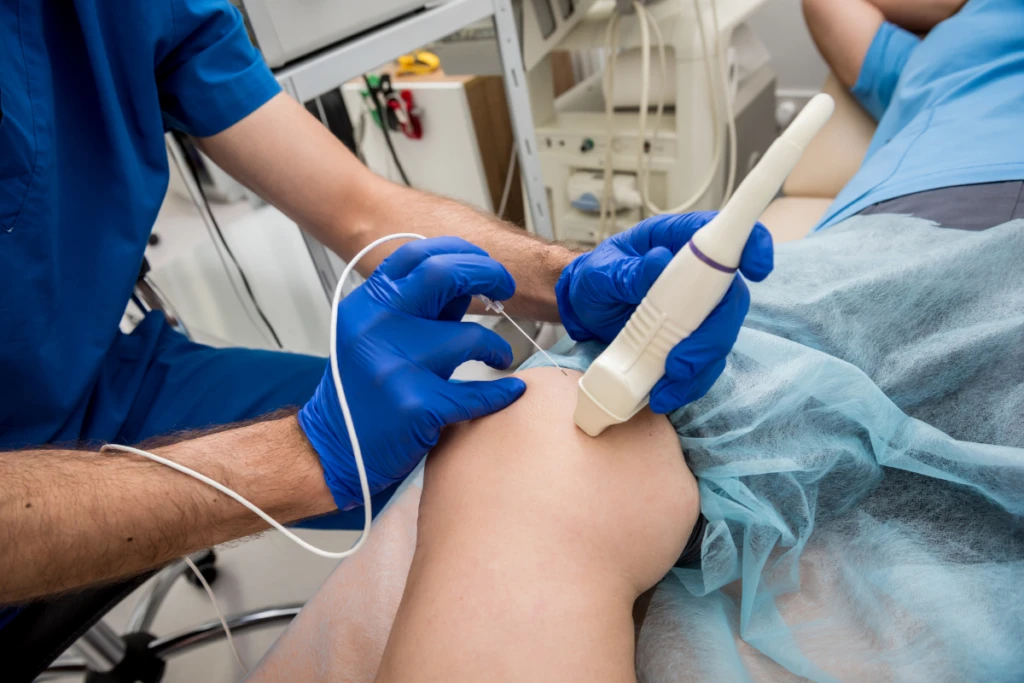
Varithena® is a minimally invasive, nonthermal treatment for eligible refluxing veins associated with varicose veins and chronic venous insufficiency. A physician administers prescription polidocanol injectable microfoam under ultrasound guidance, allowing the medication to fill and close the target vein without heat or surgical incisions. Once the unhealthy vein closes, blood naturally redirects through nearby functioning veins.
The TVE Patient Commitment Guarantee means that if your leg symptoms don’t noticeably improve after completing your treatment plan, we’ll continue your care at no additional cost for eligible veins. Learn more.
PRESCRIPTION MICROFOAM VEIN TREATMENT
Nonthermal prescription microfoam vein treatment.
Eligible refluxing superficial veins and associated varicose veins.
Polidocanol microfoam fills the target segment and causes the unhealthy vein to close.
Approximately 30 minutes or less at Texas Vein Experts.
Performed with duplex ultrasound guidance; local numbing may be used at the access site and tumescent anesthesia is generally not required.
Many patients return to routine activities the same day or within one to two days, according to their aftercare plan.
UNDERSTANDING THE TREATMENT
Varithena is a standardized prescription polidocanol injectable microfoam used to treat eligible refluxing superficial veins. The physician administers a small amount through a needle or catheter access point and uses ultrasound to guide the medication into the desired section of the vein.
The microfoam fills the target segment and allows polidocanol to contact the vein wall. This causes the unhealthy vein to close. The microfoam disperses as it reaches blood in nearby functioning veins, and circulation naturally redirects through healthier pathways.
Varithena does not use thermal energy and generally does not require the multiple tumescent-anesthesia injections used with radiofrequency ablation. It is an outpatient procedure, but the physician must still determine whether the vein anatomy, reflux pattern, medical history, and treatment goals make microfoam appropriate.
Varithena may be considered for eligible refluxing superficial veins, including certain great saphenous and accessory saphenous veins and associated varicose tributaries. Its microfoam formulation can move through some curved or tortuous vein segments that may be difficult to treat with a straight thermal catheter. Suitability depends on vein size, anatomy, reflux pattern, previous procedures, and ultrasound findings.
WHEN TO CONSIDER A VEIN EVALUATION
Varithena may be considered when symptoms or visible varicose veins are connected to superficial venous reflux. Because similar symptoms can have other causes, Texas Vein Experts uses a physical examination and duplex ultrasound before recommending treatment.
Swelling that becomes more noticeable after standing, sitting, or later in the day.
A dull, throbbing, burning, or pressure-like discomfort associated with venous reflux.
A tired or weighted feeling that may interfere with comfort, work, sleep, or activity.
Nighttime cramping or restlessness that may occur alongside other signs of vein disease.
Skin discomfort around areas affected by venous pressure or visible varicose veins.
Discoloration, inflammation, thickening, rash, or slow-healing skin changes that require clinical evaluation.
PERSONALIZED TREATMENT SELECTION
Varithena is not selected from visible veins or symptoms alone. Texas Vein Experts evaluates four factors together before deciding whether prescription microfoam is the most appropriate treatment option.
Varithena is contraindicated for patients with a known allergy to polidocanol and for those with acute thromboembolic disease. A history of blood clots, reduced mobility, pregnancy, active infection, impaired arterial circulation, medications, or another medical factor may also change the treatment recommendation.
The team reviews aching, swelling, skin changes, previous treatment, blood-clot history, known medication allergies, medicines, mobility, pregnancy status, and other health considerations.
Your provider evaluates visible varicose veins, swelling, tenderness, skin condition, pulses, and how symptoms affect daily activities.
Onsite ultrasound maps venous reflux, identifies the affected superficial veins, and documents vein size, depth, course, junction involvement, and nearby anatomy.
The physician compares Varithena with RFA, VenaSeal, compounded sclerotherapy, or a combined treatment plan according to anatomy, goals, medical risk, and coverage requirements.
THE VARITHENA PROCEDURE
1
Duplex ultrasound confirms the target vein, reflux pattern, treatment length, access point, and nearby deep veins.
2
The skin is cleaned and a small access point is prepared. Local numbing medication may be used for comfort.
3
The physician introduces a controlled amount of prescription microfoam into the target vein under ultrasound guidance.
4
Leg positioning and gentle pressure help move the microfoam through the desired segment while protecting nearby veins.
5
The team observes the patient, applies bandages or compression according to protocol, and encourages walking before discharge.
ON TREATMENT DAY AND AFTER YOUR PROCEDURE
The team confirms the leg, target veins, medical information, allergies, and ultrasound-based treatment plan.
The treatment area is cleaned, and local numbing medication may be used at the small injection or catheter access point.
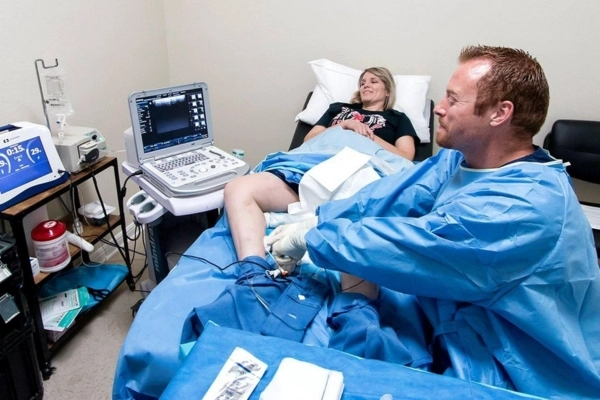
The physician administers Varithena in a controlled manner while monitoring its movement with ultrasound.
Bandages or compression may be applied. The team monitors for immediate reactions and usually encourages walking before the patient leaves.
Temporary bruising, tenderness, swelling, firmness, itching, or discomfort may occur around the injection site or treated vein.
Many patients return to routine daily activities the same day or within one to two days while following restrictions on heavy exercise or prolonged inactivity.
Some patients notice symptom improvement within a few days. Swelling and visible varicose veins may improve gradually over the following weeks or months.
Follow-up may be used to assess the treated vein and deep venous system. Additional sessions or treatment of other surface veins may be recommended.
CHOOSING THE RIGHT VEIN TREATMENT
The physician selects treatment based on symptoms, anatomy, ultrasound findings, medical history, patient preferences, coverage requirements, and the type of veins involved. No single procedure is right for every patient or every vein.
| Comparison | Varithena® | RFA / ClosureFast™ | VenaSeal™ | Compounded Sclerotherapy |
|---|---|---|---|---|
| Treatment type | Nonthermal prescription microfoam treatment | Thermal, catheter-based ablation | Nonthermal, catheter-based adhesive closure | Liquid or physician-compounded foam injection |
| How it works | Polidocanol microfoam fills and closes an eligible target vein | Controlled radiofrequency energy closes the target vein wall | Medical adhesive seals an eligible refluxing target vein | A sclerosant solution closes spider veins or selected small varicose veins |
| Possible role | Eligible refluxing superficial veins and associated varicosities, including certain tortuous segments | Eligible refluxing superficial truncal veins | Eligible superficial truncal veins where adhesive closure is appropriate | Spider veins, reticular veins, selected small varicose veins, or residual surface veins |
| Anesthesia and access | Needle or catheter access; tumescent anesthesia is generally not required | Small catheter access plus tumescent anesthesia around the vein | Small catheter access; tumescent anesthesia is generally not required | One or more small injections according to the treatment area |
| Compression | Usually recommended according to the physician’s Varithena protocol | Usually recommended according to the physician’s protocol | Often unnecessary, although recommendations vary | May be recommended according to the veins treated |
| Why it may be selected | A nonthermal treatment that can move through certain curved or tortuous vein segments without adhesive implantation | A widely used heat-based option with long-term clinical data | A nonthermal adhesive option that avoids heat and multiple tumescent injections | An injection-based option for smaller visible or superficial veins |
INSURANCE AND BENEFITS
Insurance coverage depends on the patient’s plan, diagnosis, documented symptoms, ultrasound findings, medical-necessity criteria, prior authorization requirements, and network status. Benefits verification does not guarantee payment, and patient responsibility may include deductibles, copayments, or coinsurance.
Texas Vein Experts works with most major insurance plans and offers free benefits verification so patients can better understand available coverage before scheduling treatment.
The team reviews symptoms, health history, previous care, and treatment goals.
Onsite diagnostic imaging documents venous reflux and the affected veins when medically indicated.
The verification team checks plan requirements, authorization needs, network status, and estimated patient responsibility.
The clinic explains next steps and coordinates treatment at the preferred TVE location when appropriate.
VARITHENA CARE ACROSS TEXAS
Your symptoms, vein anatomy, and duplex ultrasound findings help determine whether Varithena may be appropriate.
Your evaluation and treatment plan are guided by physicians experienced in venous disease and minimally invasive vein care.
Varithena is a minimally invasive outpatient procedure that generally takes 30 minutes or less.
You receive clear guidance about walking, activity, compression, follow-up care, and whether additional treatment may be recommended.
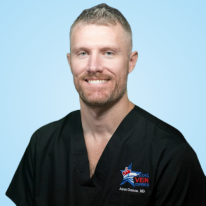
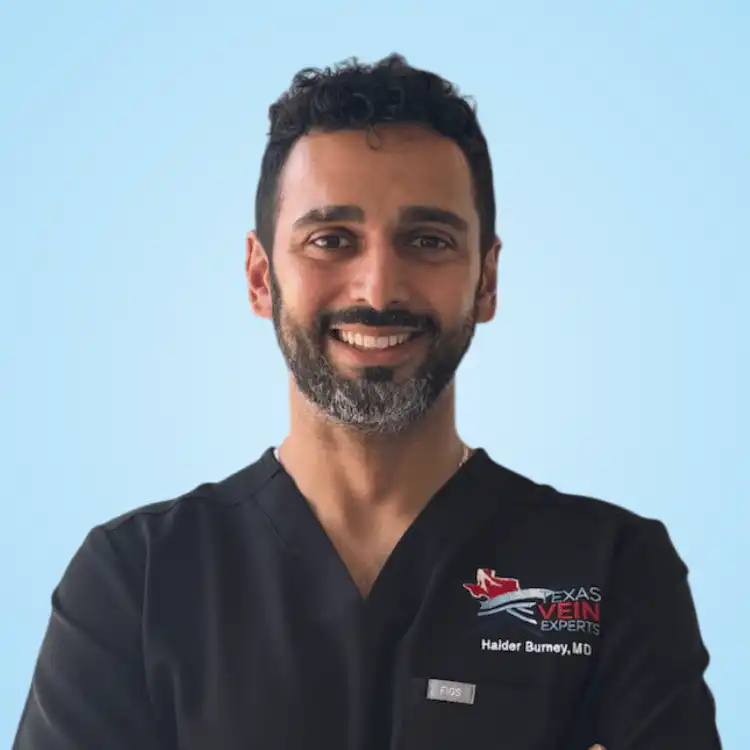
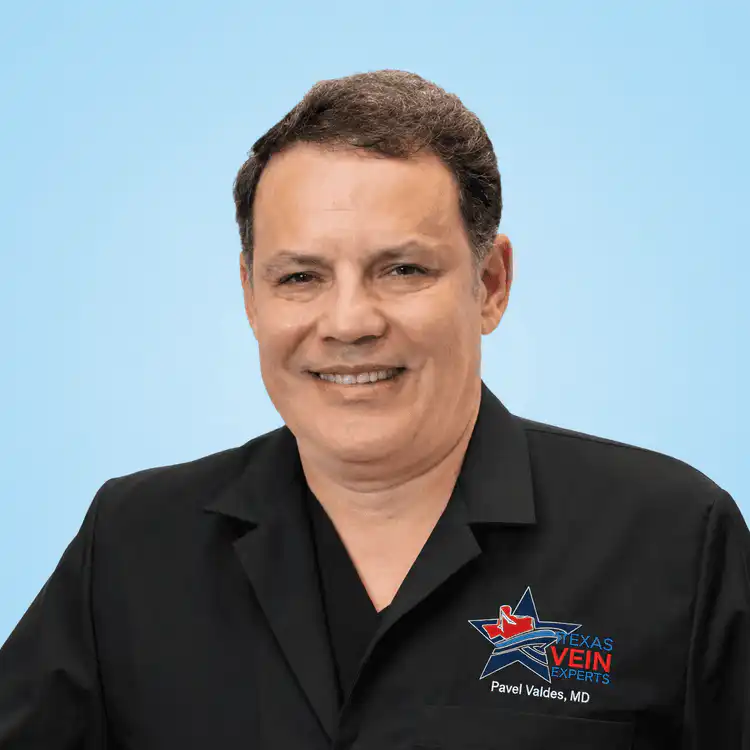
YOUR VEIN CARE TEAM
Board-Certified General Surgeon
Treating venous disorders since 2011
Locations served:
Denton
Alliance
Fort Worth
Richardson
McGovern Medical School
Minimally invasive vein care
Locations served:
Cypress
Humble
Katy
Pearland
Sugar Land
The Woodlands
Board-Certified Internal Medicine
Hospital and wound-care background
Locations served:
Frisco
Waxahachie
Grand Prairie
Burleson
Board-Certified Internal Medicine
Ultrasound-guided vein care
Locations served:
New Braunfels
San Antonio
Stone Oak
VEIN CARE YOU CAN TRUST
VARITHENA TREATMENT NEAR YOU
COMMON VARITHENA QUESTIONS