

Mon – Fri:    9:00 AM – 5:00 PM

NONTHERMAL VARICOSE VEIN TREATMENT
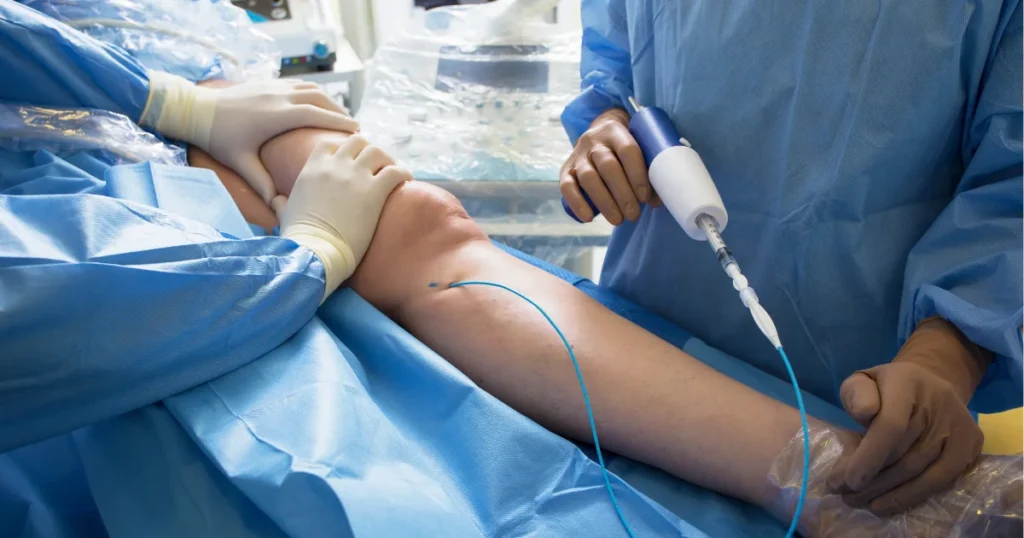
VenaSeal™ Treatment for Varicose Veins

The VenaSeal™ Closure System is a minimally invasive, catheter-based treatment that uses a specially formulated medical adhesive to close an unhealthy refluxing vein without heat or a sclerosant medication. A consultation and duplex ultrasound help determine whether VenaSeal may be appropriate for your symptoms and vein anatomy.
VenaSeal Treatment for Varicose Veins

The TVE Patient Commitment Guarantee means that if your leg symptoms don’t noticeably improve after completing your treatment plan, we’ll continue your care at no additional cost for eligible veins. Learn more.

VENASEAL AT A GLANCE

A Nonthermal Way to Close a Refluxing Vein

Treatment Type

Nonthermal, catheter-based vein treatment.

What It Treats

Eligible symptomatic refluxing veins associated with varicose veins.

How It Works

Medical adhesive seals the target vein so blood redirects through functioning veins.

Treatment Time

Approximately 30-60 minutes per leg.

Guidance and Anesthesia

Performed with duplex ultrasound guidance; tumescent anesthesia is generally not required.

Typical Recovery

Many patients resume routine activities within about 24 hours.

UNDERSTANDING THE TREATMENT

What Is the VenaSeal Closure System?

VenaSeal is a minimally invasive treatment for adults with clinically symptomatic venous reflux diagnosed by duplex ultrasound. It is sometimes called “vein glue,” but the product is actually a specially formulated medical adhesive delivered inside the target vein through a thin catheter.

The VenaSeal procedure closes the unhealthy source vein. Blood flow then redirects through nearby healthy veins. Closing one refluxing vein does not stop normal circulation.

  • Nonthermal: no heat or laser energy is used
  • Nontumescent: multiple anesthetic injections along the vein are generally unnecessary
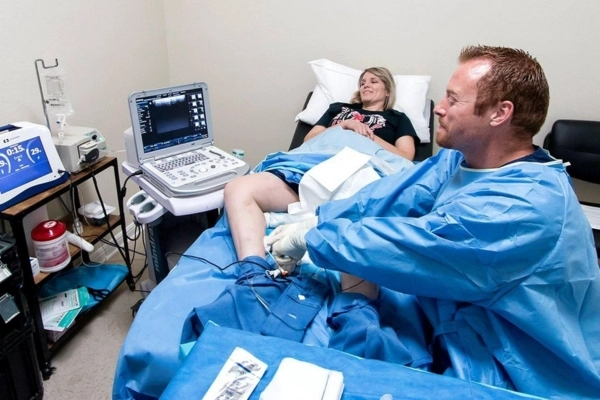
  • Ultrasound guidance supports catheter placement and closure confirmation

What Veins Can VenaSeal Treat?

VenaSeal may be considered for eligible superficial truncal veins, such as the great saphenous vein, that show reflux on duplex ultrasound. A vein specialist confirms whether the target-vein anatomy is appropriate for adhesive closure and whether associated surface veins need separate treatment.

SYMPTOMS AND VEIN DISEASE

What Can VenaSeal Treatment Address?

VenaSeal treats an eligible refluxing source vein rather than every symptom or visible surface vein directly. Your vein specialist will determine whether the symptoms below are related to venous reflux and whether additional treatment may be useful.

Leg Aching or Pain

Discomfort that worsens after long periods of standing or sitting.

Leg or Ankle Swelling

Fluid buildup that may become more noticeable later in the day.

Heaviness and Fatigue

A tired, heavy feeling that can affect comfort and mobility.

Bulging Varicose Veins

Visible veins associated with increased pressure from an underlying refluxing vein.

Burning, Itching or Cramping

Symptoms that may accompany chronic venous insufficiency.

Skin Changes

Discoloration, inflammation, or other changes that require clinical evaluation.

PERSONALIZED TREATMENT SELECTION

Are You a Candidate for VenaSeal?

VenaSeal is not chosen from symptoms alone. Texas Vein Experts combines your medical history, examination, and duplex ultrasound findings to decide whether adhesive-based vein closure fits your treatment plan.

Your VenaSeal Recommendation Is Based on Four Factors

VenaSeal may not be appropriate for patients with a known hypersensitivity to the cyanoacrylate adhesive, an acute vein infection, or certain vein anatomy. The treating physician confirms candidacy and reviews any relevant medical factors before treatment.

Symptoms and Medical History

We review aching, swelling, skin changes, past blood clots, medications, prior vein treatment, and any known sensitivity to medical adhesives or cyanoacrylates.

Physical Examination

Your provider examines visible varicose veins, swelling, skin condition, tenderness, and the areas where symptoms interfere with daily life.

Duplex Ultrasound Findings

Onsite ultrasound identifies reflux, maps the affected vein, and helps determine whether the target is an appropriate superficial truncal vein for VenaSeal closure.

Personalized Treatment Recommendation

We compare VenaSeal with RFA, Varithena, and other treatment options according to your vein anatomy, preferences, insurance requirements, and clinical goals.

THE VENASEAL PROCEDURE

How Does VenaSeal Treatment Work?

The outpatient procedure uses ultrasound guidance, a thin catheter, and small amounts of medical adhesive to close the target vein from within.

1

Map the Target Vein

Ultrasound confirms the refluxing vein and guides the planned access point and treatment length.

2

Numb the Access Site

A small amount of local anesthetic may be used where the catheter enters the vein.

3

Position the Catheter

The physician advances a thin catheter through one access point under continuous ultrasound guidance.

4

Deliver Adhesive

Small amounts of adhesive are placed while pressure is applied over the vein to support closure.

5

Confirm Closure

Ultrasound checks the treated segment. The access site is covered, and most patients walk before leaving.

YOUR TREATMENT EXPERIENCE

What to Expect During and After VenaSeal

Individual instructions vary, but the treatment is designed to reduce the need for multiple needle sticks and tumescent anesthesia used with thermal ablation.

On Treatment Day

Arrive and Prepare

The team reviews your plan, confirms the leg and vein, and prepares the access area using sterile technique.

Receive the Treatment

You may feel a brief sting from local numbing, pressure, or a mild pulling sensation as the catheter and adhesive are used.

Walk Before Leaving

The access site is covered and the team reviews your aftercare instructions. Patients generally return home the same day.

Ultrasound Confirmation

Before you leave, ultrasound may be used to check the treated segment and confirm the vein has closed.

After the Procedure

First 24 Hours

Many patients resume routine daily activities within 24 hours. Follow your physician’s guidance for exercise, travel, and lifting.

Compression Guidance

Compression stockings are often unnecessary after VenaSeal, although they may be recommended for your plan or additional procedures.

Symptom Improvement

Aching, swelling, and heaviness often ease over the following weeks as the treated vein closes and blood reroutes through healthy veins.

Follow-Up and Results

Improvement may continue over one to three months. Follow-up ultrasound helps evaluate closure and the remaining treatment plan.

CHOOSING THE RIGHT VEIN TREATMENT

How Does VenaSeal Compare With Other Vein Treatments?

Your physician selects treatment based on your symptoms, vein anatomy, ultrasound findings, medical history, and the type of veins involved.

Comparison VenaSeal™ RFA / ClosureFast™ Varithena® Compounded Sclerotherapy
Treatment type Nonthermal, catheter-based adhesive treatment. Thermal, catheter-based ablation. Nonthermal prescription microfoam treatment. Liquid or physician-compounded foam injection.
How it works Medical adhesive seals an eligible refluxing target vein. Controlled radiofrequency energy closes an eligible refluxing vein. Prescription microfoam fills and closes an eligible target vein. A sclerosant solution causes spider veins or eligible small varicose veins to close.
Possible role Eligible superficial truncal veins associated with symptomatic venous reflux. Suitable refluxing superficial veins that can be treated with thermal ablation. Eligible refluxing veins where microfoam treatment is appropriate. Spider veins, reticular veins, eligible small varicose veins, or residual surface veins.
Anesthesia and access Local anesthetic may be used at the catheter access site; tumescent anesthesia is generally not required. Tumescent anesthesia is placed around the vein through multiple injections. Delivered through needle or catheter access; tumescent anesthesia is generally not required. Administered through one or more small injections, depending on the treatment area.
Compression Often unnecessary, although physician recommendations vary. Compression recommendations depend on the treatment plan. Compression recommendations are individualized. Compression may be recommended based on the veins treated and the physician’s protocol.
Why it may be selected A nonthermal, nonsclerosant option that avoids heat and multiple tumescent injections. A widely used heat-based option for suitable refluxing veins. A nonthermal option that can treat certain vein shapes without adhesive implantation. An injection-based option for smaller visible or superficial veins.
No single treatment is right for every vein. A duplex ultrasound and physician evaluation should determine the most appropriate option.

COST AND COVERAGE

Insurance Benefits Verification for VenaSeal

The cost of VenaSeal depends on the treatment plan, number of veins, insurance network, deductible, coinsurance, and medical-necessity requirements. Coverage is not guaranteed.

Texas Vein Experts works with most major insurance plans and can review your benefits before treatment. Prior authorization, conservative-care documentation, and ultrasound findings may affect approval.

What the TVE Team Can Help Review

Your Insurance Benefits

Confirm network participation and the benefits available under your specific plan.

Medical-Necessity Requirements

Review symptoms, ultrasound findings, prior care, and documentation required by the payer.

Authorization Status

Determine whether prior authorization is required before the VenaSeal procedure.

Estimated Patient Responsibility

Explain available information about deductibles, copays, or coinsurance before treatment.

VENASEAL CARE ACROSS TEXAS

Why Choose Texas Vein Experts?

Ultrasound-Guided Evaluation

Your symptoms, vein anatomy, and duplex ultrasound findings help determine whether VenaSeal may be appropriate for your condition.

Experienced Vein Specialists

Your evaluation and treatment plan are guided by clinicians experienced in venous disease and minimally invasive vein care.

30-60 Minute Treatment

VenaSeal is a minimally invasive outpatient procedure that typically takes approximately 30-60 minutes per leg.

Personalized Aftercare

You receive clear guidance about activity, compression, follow-up care, and whether any additional vein treatment may be recommended.
YOUR VEIN CARE TEAM
Meet the Doctors Who Perform VenaSeal Treatment

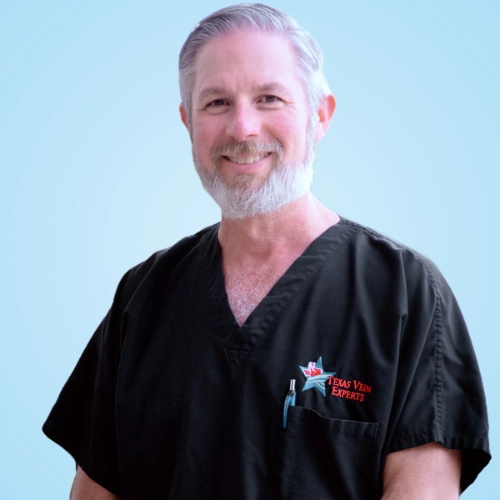
Dr. Scott Powell, MD

Vein Specialist

Board-Certified General Surgeon

Treating venous disorders since 2011

Locations served:

Denton

Alliance

Fort Worth

Richardson
Dr. Scott Powell graduated from UTMB Medical School and completed a five-year surgical residency at the University of Florida. He has practiced in Texas since 2003 and has specialized in the treatment of venous disorders since 2011. He has taught colleagues and peers about venous disease at national conferences and has served as a physician trainer.

Dr. Aaron Chance, MD

Houston Medical Director

McGovern Medical School

Minimally invasive vein care

Locations served:

Cypress

Humble

Katy

Pearland

Sugar Land

The Woodlands
Aaron B. Chance, MD, specializes in venous insufficiency and graduated from McGovern Medical School in Houston. He trained under Dr. Scott Powell and serves as Medical Director of Texas Vein Experts in Houston. Dr. Chance provides minimally invasive treatments designed to improve comfort and mobility through a streamlined outpatient experience.

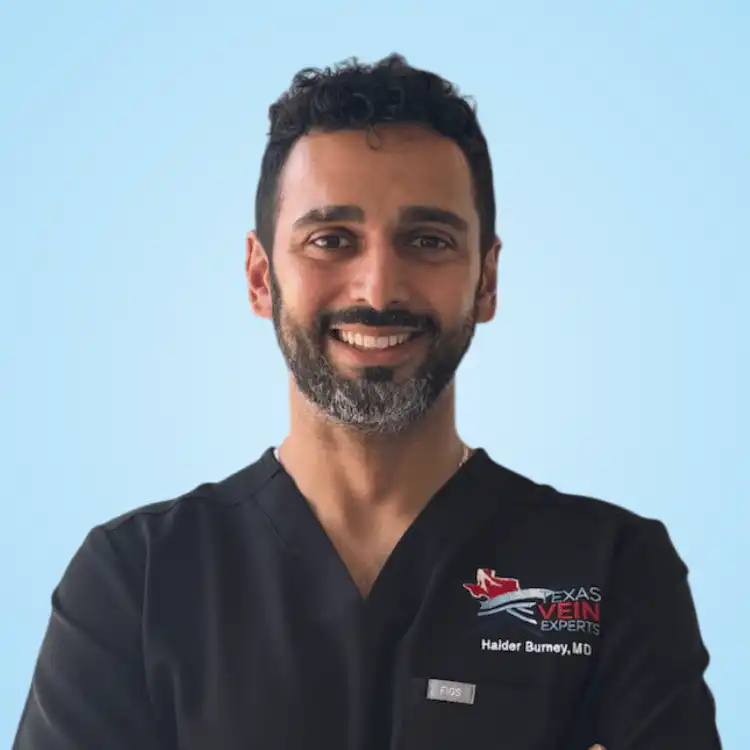
Dr. Haider Burney, MD

Vein Specialist

Board-Certified Internal Medicine

Hospital and wound-care background

Locations served:

Frisco

Waxahachie

Grand Prairie

Burleson
Dr. Haider Burney is a board-certified internal medicine physician with a background in hospital medicine and wound care. He earned his medical degree from the American University of Antigua and completed his residency at One Brooklyn Health System in New York, where he also served as an Assistant Program Director. At Texas Vein Experts, he diagnoses and treats venous insufficiency using minimally invasive techniques and a personalized approach to care.

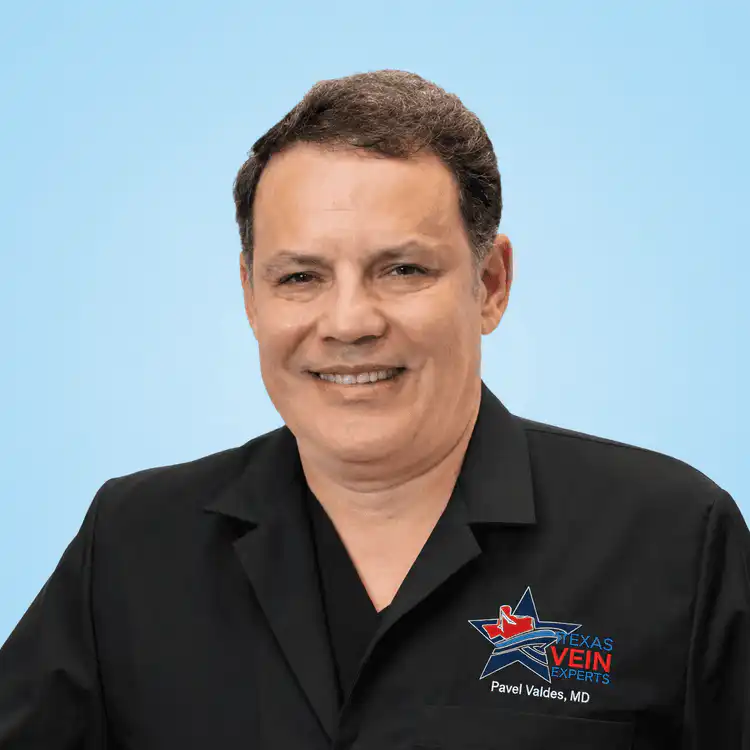
Dr. Pavel Valdes, MD

Vein Specialist

Board-Certified Internal Medicine

Ultrasound-guided vein care

Locations served:

New Braunfels

San Antonio

Stone Oak

Dr. Pavel Valdes is a board-certified internal medicine physician specializing in minimally invasive vein care. He provides ultrasound-guided treatment for varicose veins, chronic venous insufficiency, leg pain, venous ulcers, and related vein conditions. He refined his expertise through specialized one-on-one training in modern vein medicine under the guidance of Dr. Scott J. Powell and focuses on compassionate, personalized care.

VEIN CARE YOU CAN TRUST

Top-Rated Vein Clinic Across Texas

Everyone was professional & pleasant to deal with, starting with the receptionist who greeted me, to the techs who took my medical info & performed the doppler, to Jesus the provider who explained the results of my exam & treatment options. I highly recommend the Ft Worth-Alliance office!
What’s not to love. Super clean facility, friendly staff, crazy fast wait times to be seen, professional and very knowledgeable. Oh and they’ve got offices located in different parts of DFW. So again, what’s not to love about that.
So far so good! I haven't started treatments yet, but first impressions are important! I love that you get a sonogram and a consultation and treatment plan all in the first appointment. The staff are all super nice, and Jesus (Waxahachie location) listened carefully to what I had to discuss with him. We have first treatment already set up!
Dr. Powell is one of the best Vascular Surgeon that I have found as our move to Oklahoma. He has done amazing procedure on my right leg. I would highly recommend him to anyone. His staff is great so if you are looking for a great Vascular Surgeon, he is the one. Thank you Dr. Powell and his staff.i was so blessed to find you.
This place always got me & my family in fast and easy!! They explain everything to your understanding and made me feel more comfortable! Nicole helped me personally a lot and made sure I was taken care of. Thank you Nicole and Texas vein experts!!!
I was comfortable,with my visit.Everyone was Super Nice,The doctor Rachelle came n my room and explained n detail what and were my pains were. Yes I am going to follow her advice on both my legs.C. U. On Wednesday Dr. Rachelle. Thank U and your staff from Susan Ball~Thompson
Happy with my treatment!!! It meet my needs on my veins health,and comfort on every procedure. I feel much better.The staff is very friendly and doctors very profesional. I highly recomend this place to friends and family.
The staff is exceptionally friendly and very helpful. Bradley explained the options very clearly. Bert is trained on the ultrasound and is friendly and explained what was happening. Ruben greeted and explained at the end what was happening and the next steps in addition to what Bradley had done. All around, highly recommend.
The staff is very cheerful and accommodating. I never have to wait longer than a few minutes until I see the doctor. Everything about the procedure is clearly explained and all my questions are answered. Great experience!
Dr Powell and Dr Howe have been incredible in my time being treated at Texas Vein Experts. I was scared and really nervous my first procedure and the entire staff put all my fears first and talked me through everything before they did it. I would highly recommend this office for anyone dealing with vein problems.

VENASEAL TREATMENT NEAR YOU

Find a Texas Vein Experts Clinic

COMMON VENASEAL QUESTIONS

Frequently Asked Questions About VenaSeal Treatment

VenaSeal is a minimally invasive vein-closure procedure that uses a specially formulated medical adhesive delivered through a catheter to close an eligible refluxing superficial truncal vein.
VenaSeal should not be described as pain-free for every patient. Most patients report little discomfort, but a brief sting, pressure, pulling sensation, or tenderness may occur.
Texas Vein Experts currently describes the procedure as typically taking about 30-60 minutes per leg. Timing depends on the treatment plan and the length and number of veins addressed.
Compression stockings are often unnecessary after VenaSeal. They may still be recommended based on your anatomy, symptoms, physician preference, or other procedures performed during the treatment plan.
Hypersensitivity or allergic reactions to cyanoacrylate medical adhesive are possible. Tell your provider about adhesive allergies and prior reactions before treatment.
Clinical trials have demonstrated durable target-vein closure through five years in selected patients. Results vary, and treatment does not prevent other veins from developing reflux in the future.
VenaSeal uses medical adhesive and generally avoids tumescent anesthesia. RFA uses controlled heat and tumescent anesthesia around the vein. Both can be effective for appropriate anatomy.
Cost varies by the number of veins treated, insurance benefits, medical-necessity criteria, deductible, coinsurance, and network status. TVE can review available benefits before treatment.
VenaSeal is available at all Texas Vein Experts clinics across DFW, Houston, and the San Antonio market.
A physician maps the vein with ultrasound, numbs the access site, positions a catheter, and delivers small amounts of adhesive while applying pressure over the vein. Ultrasound is then used to confirm treatment.
Temporary bruising can occur. The pivotal trial reported less early bruising with cyanoacrylate closure than with radiofrequency ablation, but individual experiences vary.
Many patients resume routine daily activities within 24 hours. Your physician may give different guidance for strenuous exercise, lifting, long travel, or work demands.
The adhesive remains within the sealed target vein as a permanent implant. Over time, the treated vein becomes a fibrotic cord while blood continues through functioning veins.
Phlebitis is inflammation along a treated vein and may cause tenderness, redness, warmth, or swelling. The clinic should evaluate symptoms that are significant, worsening, or concerning.
Not necessarily. VenaSeal closes the underlying refluxing source vein. Visible surface veins may improve gradually or may require additional treatment such as sclerotherapy according to the treatment plan.
VenaSeal uses a permanent medical adhesive delivered by catheter. Varithena uses prescription polidocanol microfoam and does not leave an adhesive implant. Ultrasound findings help guide the choice.
Some plans may cover medically necessary VenaSeal treatment, but coverage and authorization requirements vary. Benefits verification is not a guarantee of payment.