

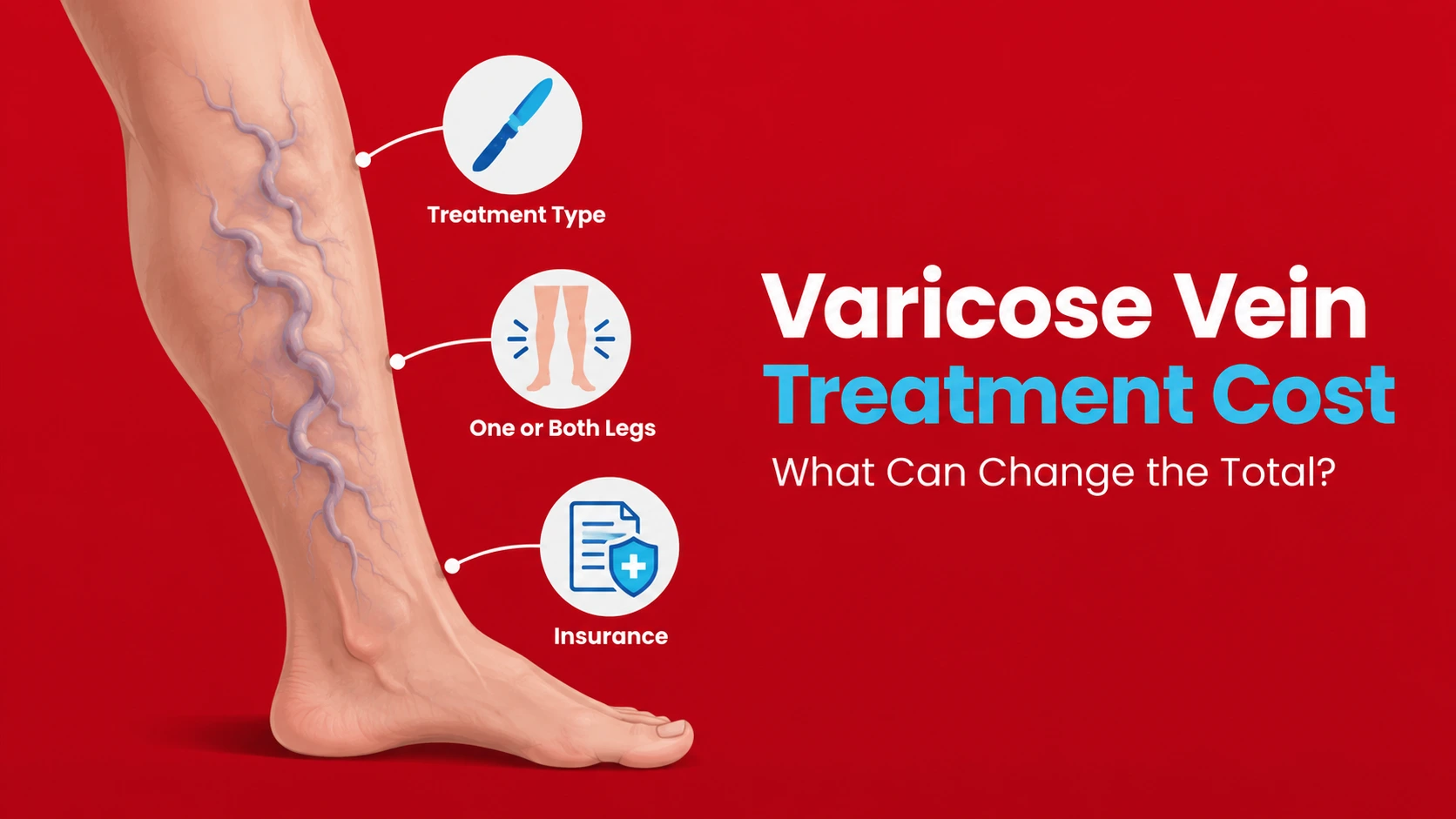
Varicose vein treatment can range from a few hundred dollars for some sclerotherapy sessions to roughly $1,500 to $3,000 for many catheter-based treatments. That is only a broad planning range, not Texas Vein Experts pricing. The final cost depends on the treatment method, number and size of veins, one or both legs, number of treatment sessions, and insurance benefits.
These figures are general third-party benchmarks, not Texas Vein Experts pricing. Your actual cost of varicose vein treatment may be lower with insurance or different when paying without insurance. At Texas Vein Experts, a vein evaluation and onsite ultrasound help identify the affected vein and determine which treatment option is appropriate before a personalized estimate is discussed.
Texas Vein Experts currently uses minimally invasive vein treatment options including radiofrequency ablation, VenaSeal, Varithena, and sclerotherapy. The right treatment plan depends on symptoms, vein anatomy, ultrasound findings, medical history, and insurance requirements rather than price alone.
What Is the Average Cost of Varicose Vein Treatment?
There is no single average cost that applies to every varicose vein procedure. As a general planning guide, sclerotherapy may fall around $300 to $800 per session, while treatments such as RFA, VenaSeal, or Varithena often fall in the low-thousands range. The actual amount can be lower or higher depending on the treatment plan and insurance.
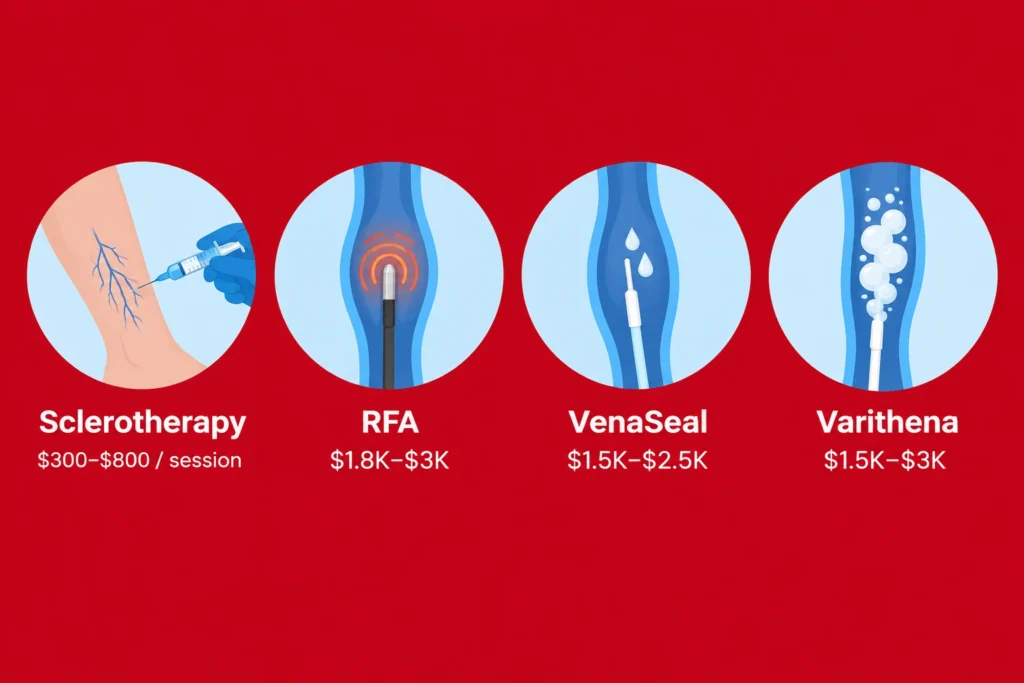
The table below gives broad planning ranges for the vein treatments TVE currently offers. These are not clinic quotes. They are intended to help patients understand the relative scale of different treatments before a personalized estimate is prepared.
| Treatment | General Planning Range | What Can Change the Total |
| Sclerotherapy | $300-$800 per session | Number/extent of veins, treatment area, number of sessions, cosmetic vs. medically necessary care |
| Radiofrequency ablation (RFA) | $1,800-$3,000 per treated leg/procedure | Number and length of refluxing veins, one or both legs, insurance, additional vein treatment |
| VenaSeal | $1,500-$2,500 per treatment | Number of veins, anatomy, insurance benefits, additional treatment |
| Varithena | $1,500-$3,000 per treatment | Number and size of veins, sessions, one or both legs, insurance |
Planning-range note: A patient’s actual cost can differ because treatment may involve one or both legs, one or multiple veins, additional sessions, insurance cost sharing, and services that may be billed separately. TVE can discuss expected patient responsibility after the treatment plan and benefits are reviewed.
How Much Do Different Varicose Vein Treatments Cost?
The cost of vein treatment changes with the procedure because each method uses different medication, devices, access techniques, imaging, and follow-up. The most appropriate treatment for varicose veins should be selected clinically, not simply by choosing the lowest published price.
Radiofrequency Ablation (RFA)
A broad planning range for RFA is about $1,800 to $3,000 for a treated leg or procedure, although the actual amount can fall outside that range depending on the veins involved, treatment setting, and insurance. RFA is a minimally invasive thermal ablation procedure used for eligible refluxing superficial veins. At TVE, cost depends on the number of veins treated, the treatment plan, provider network, deductible, copayment, coinsurance, and authorization requirements. Learn more about radiofrequency ablation treatment.
VenaSeal
VenaSeal commonly falls within a broad planning range of about $1,500 to $2,500 per treatment, but the final amount depends on the treatment plan and insurance. VenaSeal uses a medical adhesive to close an eligible refluxing vein. TVE notes that the cost can vary with the number of veins, insurance network, deductible, coinsurance, and medical-necessity requirements. Learn more about VenaSeal treatment.
Varithena
Varithena often falls within a broad planning range of about $1,500 to $3,000 per treatment, although the final amount can vary with the number and size of veins, sessions, and insurance. Varithena is a prescription polidocanol microfoam treatment for eligible refluxing veins and associated varicose veins. At TVE, the cost of your treatment can vary with the number of veins, treatment plan, insurance network, deductible, copayment, coinsurance, and authorization requirements. Learn more about Varithena treatment.
Sclerotherapy
Sclerotherapy for spider veins and smaller surface veins may commonly fall around $300 to $800 per session, depending on the treatment area and amount of treatment required. Sclerotherapy is commonly used for spider veins, reticular veins, and eligible smaller varicose veins. The cost of sclerotherapy treatment may depend on the number and type of veins, treatment area, medication or foam formulation, ultrasound guidance, and the number of sessions needed. TVE notes that many patients receive one or two sessions, although additional treatment may be recommended. Learn more about sclerotherapy for spider and varicose veins.
Endovenous laser ablation is another minimally invasive treatment used by some practices for certain refluxing veins. Its market pricing can overlap with other catheter-based procedures, but availability and suitability depend on the clinic, vein anatomy, and clinical findings. TVE does not use a competitor’s advertised laser price to determine which treatment is right for a patient.
What Factors Affect Varicose Vein Treatment Cost?
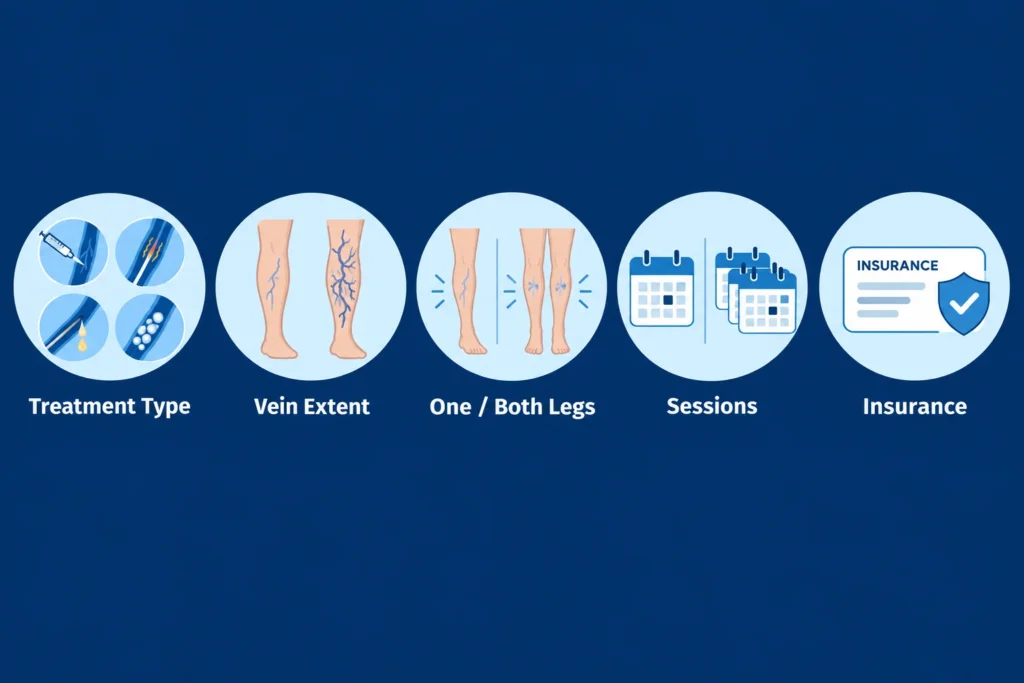
Several factors can influence the overall cost and explain why two patients with visible varicose veins may receive different estimates.
1. Type of Treatment
RFA, VenaSeal, Varithena, and sclerotherapy use different treatment methods. Each procedure has different supplies, medication, equipment, imaging needs, and treatment time. The specific treatment should be selected after a vein specialist evaluates the underlying vein disease.
2. Number and Size of Veins
The number of veins being treated, their size, depth, length, and location can influence the treatment plan. A patient with one affected vein may need a different approach from someone with several refluxing veins or visible tributaries in both legs.
3. One Leg or Both Legs
Some published cost datasets report certain vein procedures per leg. That does not mean every vein clinic uses the same pricing model. It simply shows that the extent of disease and the number of areas treated can influence the final cost.
4. Number of Treatment Sessions or Procedures
Some patients need one primary procedure, while others need multiple treatments to address different veins. For example, an underlying refluxing vein may be treated first, followed by sclerotherapy for remaining visible veins. The total cost can therefore reflect more than one treatment session or procedure.
5. Insurance Plan and Medical Necessity
Insurance can significantly change out-of-pocket costs. Medically necessary varicose vein treatment may be covered when the insurance plan criteria are met, while cosmetic vein treatment may be self-pay. Coverage can depend on symptoms, ultrasound findings, diagnosis, prior conservative care, network status, and prior authorization. Review TVE’s insurance coverage information for current plan-verification options.
6. What Is Included in the Estimate
Online prices may describe only the procedure, while another estimate may include or separately bill evaluation, duplex ultrasound, follow-up, compression stockings, medication, or treatment of additional veins. Ask what is included before comparing two prices.
How Much Does Varicose Vein Treatment Cost Without Insurance?
Without insurance, varicose vein treatment can range from several hundred dollars for a sclerotherapy session to several thousand dollars for catheter-based care. The exact self-pay amount depends on the treatment method, number of veins, one or both legs, number of sessions, and whether additional treatment is needed.
A broad range is more useful than one advertised number because a low price may describe a single injection session, while a higher amount may reflect a catheter-based procedure or a more complex treatment plan. Your estimate should be based on the treatment TVE actually recommends for your veins.
If you are paying without insurance, ask whether the estimate includes the consultation, ultrasound, procedure, follow-up, and any recommended compression stockings or additional vein care. Patients who want to review payment options can also visit TVE’s financing page.
Is Varicose Vein Treatment Covered by Insurance?
Varicose vein treatment may be covered by health insurance when it is deemed medically necessary and the insurance policy requirements are met. Texas Vein Experts works with most major insurance plans and offers free insurance benefits verification. Benefits verification can help clarify available coverage, but it does not guarantee that an insurance company will pay a claim.
Coverage may depend on documented symptoms, duplex ultrasound findings, the affected vein, diagnosis, medical-necessity criteria, conservative-treatment requirements, prior authorization, and whether the vein doctor or vein clinic is in network. Even when a vein procedure is covered by insurance, the patient may still have a deductible, copay, coinsurance, or another plan-specific responsibility.
For plan-specific information, review TVE’s insurance page. Medicare has separate coverage rules, which are explained in our Medicare coverage for varicose vein treatment guide.
What Is the Difference Between Cosmetic and Medically Necessary Vein Treatment?
The reason for treatment matters because insurance plans often distinguish medical treatment from cosmetic care. Visible veins alone do not automatically establish medical necessity.
Cosmetic treatment generally focuses on appearance, such as isolated spider veins without documented symptoms or underlying venous disease. Cosmetic vein treatments are commonly self-pay. Medically necessary treatment addresses documented vein disease that causes symptoms or other clinical problems and may be eligible for insurance coverage when plan criteria are met.
A vein specialist can evaluate symptoms, visible veins, and ultrasound findings to determine whether treatment is primarily cosmetic, medically necessary, or part of a broader treatment plan.
Does Spider Vein Treatment Cost the Same as Varicose Vein Treatment?
Not necessarily. Spider veins are smaller surface veins and are often treated differently from larger varicose veins or deeper refluxing source veins. Sclerotherapy is commonly used for spider veins and selected smaller varicose veins, while RFA, VenaSeal, or Varithena may be considered for different vein anatomy and underlying reflux.
Because the treatment method, number of sessions, and insurance status can differ, spider vein treatment cost should not be assumed to match the cost of deeper varicose vein treatment. We will cover this topic separately in our upcoming spider vein removal cost guide.
What Can Be Included in a Varicose Vein Treatment Cost Estimate?
The exact billing structure depends on the clinic and insurance arrangement. A vein treatment care pathway can involve several services, so ask which are included or billed separately:
Consultation and clinical evaluation: A vein doctor or provider reviews symptoms, medical history, visible veins, previous treatment, and treatment goals.
Duplex ultrasound: Ultrasound can document venous reflux, identify the source of vein problems, and map the veins that may need treatment.
The vein procedure: The procedure cost can differ for RFA, VenaSeal, Varithena, sclerotherapy, or another treatment method.
Aftercare and follow-up: Walking guidance, compression recommendations, follow-up visits, and additional ultrasound may be part of the care pathway.
Treatment of remaining veins: Additional visible varicose or spider veins may require another procedure or treatment session after an underlying refluxing vein is addressed.
Can One Patient Need More Than One Type of Vein Treatment?
Yes. Varicose veins can involve more than one vein size or level of the superficial venous system. A treatment plan may address the main refluxing source vein with one procedure and use another method for remaining surface veins.
For example, TVE may compare RFA, VenaSeal, Varithena, and compounded sclerotherapy based on the anatomy and ultrasound findings. Multiple treatments do not mean that a single procedure failed. They may represent different steps used to treat different veins within the same overall plan.
Traditional vein surgery also has a different cost structure from modern office-based treatment. We will compare those approaches in our upcoming vein stripping surgery cost guide.
How Can You Get an Accurate Varicose Vein Treatment Cost Estimate?
The most useful estimate is based on your actual vein condition, the treatment required, and your insurance benefits rather than an online average. Texas Vein Experts uses a step-by-step evaluation process before treatment is selected.
1. Consultation: The team reviews symptoms, medical history, visible veins, previous care, and treatment goals.
2. Ultrasound: Onsite duplex ultrasound can identify venous reflux and the affected veins when clinically appropriate. TVE provides same-day ultrasound results as part of its process.
3. Personalized Treatment Plan: The physician determines which treatment option, or combination of treatments, best fits the vein anatomy and clinical findings.
4. Benefits Verification: TVE can review network status, authorization requirements, available insurance coverage, and estimated patient responsibility before treatment when possible.
5. Cost Discussion and Scheduling: Once the treatment plan and available benefits are understood, the team can explain the next steps and expected financial responsibility.
Texas Vein Experts has vein clinic locations across DFW, Houston, and the San Antonio market, making it easier to complete evaluation and treatment within the same practice network.
| Want a Personalized Varicose Vein Treatment Cost Estimate? Schedule a Vein Consultation |
Frequently Asked Questions About Varicose Vein Treatment Cost
How much does varicose vein treatment cost?
Varicose vein treatment can range from a few hundred dollars for some sclerotherapy sessions to roughly $1,500 to $3,000 for many catheter-based treatments. Your actual cost may be lower or higher depending on the treatment plan, number of veins, one or both legs, insurance benefits, and any additional treatment that is needed.
How much does varicose vein treatment cost without insurance?
Without insurance, the patient generally pays the self-pay amount for the recommended treatment. The final cost can vary with the treatment method, number of veins, one or both legs, number of sessions, and what the estimate includes. Ask for a personalized cost estimate rather than relying on one national average.
Is varicose vein treatment covered by insurance?
Medically necessary varicose vein treatment may be covered when the insurance plan requirements are met. Coverage can depend on symptoms, ultrasound findings, diagnosis, network status, prior authorization, and other criteria. TVE offers free insurance benefits verification, but verification does not guarantee payment.
How much does sclerotherapy cost?
Sclerotherapy may commonly fall around $300 to $800 per session. The actual cost depends on the number and type of veins, treatment area, medication or foam formulation, ultrasound guidance when needed, and the number of sessions recommended.
Does treatment cost more if both legs need treatment?
It can. Some published sources report certain procedures per leg, and treating more veins or both legs can change the treatment plan. TVE should determine the actual cost after ultrasound identifies which veins need treatment.
Can one patient need more than one vein treatment?
Yes. Different veins may require different treatment methods. A patient may need an underlying refluxing vein treated first and then receive another procedure for remaining visible veins. The overall treatment cost can therefore include more than one procedure or session.
What does a vein treatment cost estimate include?
It depends on the clinic and insurance arrangement. Consultation, duplex ultrasound, the procedure, follow-up, compression supplies, and treatment of additional veins may be included or billed separately. Ask for a clear breakdown before comparing estimates.